I was twenty-four years old when I got married. Twenty-four, which sounds young now in a way it did not feel at the time.
At twenty-four, I thought I knew enough. I thought love was supposed to look a certain way, that life followed a particular sequence, and that saying yes was the right thing to do because everything around me was pointing in that direction.
What I did not do, what nobody around me encouraged me to do, and what I did not yet have the courage to do for myself, was stop. Just stop. Ask myself the question that mattered most. Not “is this a good person?” Not “does this make sense on paper?” Not “what will everyone think if I do not go through with this?”
The question I should have asked was simpler and far more terrifying than any of those: Is this my person?
I knew the answer. I knew it earlier than I have ever admitted out loud. I knew it, and I married him anyway, and then I spent eighteen years navigating the consequences of that choice.
This article is not about blame. Not his, not mine, not anyone else’s. It is about the things I wish someone had handed me before I walked down that aisle. The things I wish I had given myself permission to do, to feel, and to say before I made a promise I was not ready to make.
***Please note that this site uses affiliate links if you would like to read the legal stuff you can find it here
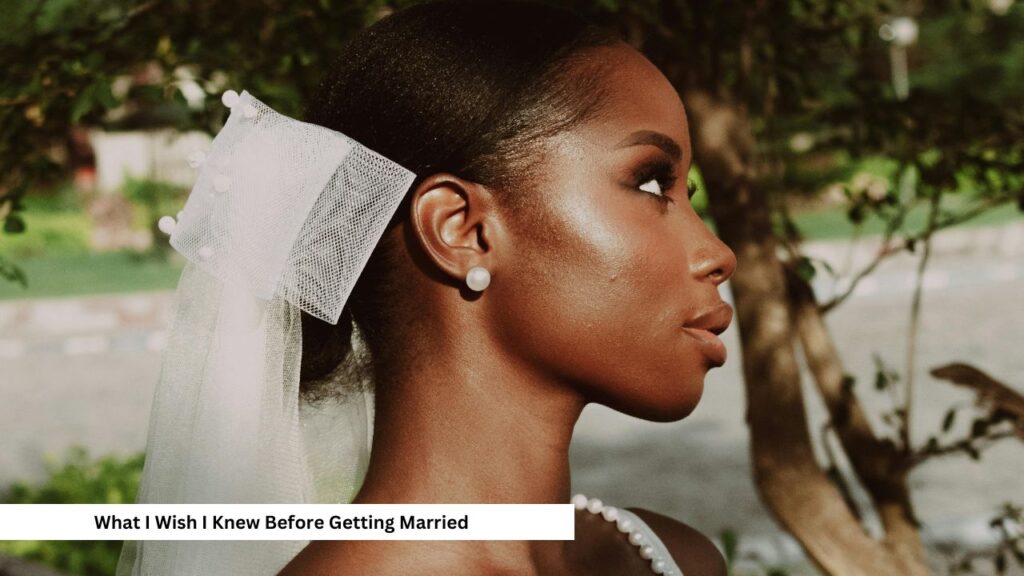
I Wish I Had Listened to the Quiet Voice Instead of the Loud Room
There is a particular experience that I think more women have than will ever admit to, especially in certain communities and certain seasons of life. It is the experience of knowing something privately that you cannot yet say publicly. Of carrying a truth that the world around you is not ready to receive, and slowly, quietly, talking yourself out of it because the noise of everyone else’s expectations is simply louder than your own internal voice.
I knew he was not my person, not in a cruel way, but in the specific and important way that matters most when you are choosing who to build a life with. Something in me knew. That quiet, steady, uncomfortable knowing that sits underneath the excitement and the plans and the forward momentum of an impending wedding.
I wish I had understood then that the quiet voice is almost always the right one. It does not shout. It does not make itself convenient. It speaks in the moments when everything else goes still, and it tells you the truth whether you are ready to hear it or not. Learning to honour that voice is one of the most important things a woman can do before she makes any major decision, but particularly this one.
I Wish I Had Separated My Own Values From Everyone Else’s
At twenty-four, I was deeply embedded in a faith community, and that community shaped almost everything about how I understood life, relationships, marriage, and what it meant to be a good woman.
I am not angry about that. The faith I had was real, and the community mattered to me genuinely, but what I did not yet know how to do was separate the values that were truly mine from the ones I had absorbed from the environment around me.
When you are surrounded by a particular way of seeing the world for long enough, it stops feeling like a perspective and starts feeling like reality.
The expectations of that community around marriage, commitment, and what it meant to honour a promise made in front of God and other people, those things carried enormous weight. More weight, at twenty-four, than my own inner knowing did.
It was only years later, when my ex and I moved to Ghana and stepped outside of that environment, that I began to understand the difference between what I actually believed and what I had been shaped to believe.
Away from the social architecture that had surrounded us, things came into focus differently. The distance gave me room to think thoughts I had not known I was suppressing. To feel things that had been very quietly managed for a long time.
I wish someone had sat with me before the wedding and asked me what I truly wanted. Made me think about things a little more. Was this really the person for me? Is this really a person whose leadership I want to follow? Do you actually love him?
These are not questions anyone asked me. I am asking it now, for anyone reading this who might need to hear it.
I Wish I Had Cared Less About What People Would Think
This one is perhaps the hardest to admit, because it involves owning something that does not reflect particularly well on me. I stayed on a path I already knew was wrong because I was afraid of other people’s opinions. Not in a vague, general way. In a very specific, very real way that influenced one of the most significant decisions of my life.
The fear of being seen as someone who could not commit. The fear of what the community would say. The fear of the conversations, the questions, the quiet judgements that would follow if I walked away from a young marriage. The fear of being the woman who left.
I let that fear carry more weight than my own well-being, and I paid for it, quietly and consistently, for eighteen years.
What I know now, that I did not know then, is that the people whose opinions you are so afraid of will not be in the room with you on an ordinary Tuesday evening, fifteen years into a marriage that should never have happened.
The judgements you feared will have long been forgotten by the people who made them. Life will have moved on for everyone else in the way that life always does.
The only person who stays in that room with you, every single day, is you.
Your life is not a performance for other people’s comfort. The opinions of others are not a good enough reason to sacrifice years of your own.
I wish I had understood that with the same clarity at twenty-four that I carry now.
I Wish I Had Understood the Difference Between Love and Obligation
I cared about him. I want to say that clearly. There was care. There was a genuine desire to make something work, but I have come to understand, in the years since, that there is a profound difference between loving someone and feeling obligated to them, between choosing to be with someone and feeling that you have no real choice.
Obligation can wear the costume of love for a very long time, particularly if you are a person who takes commitment seriously, who has been raised to honour your word, and who genuinely wants to be a good partner.
It is possible to show up faithfully and consistently in a marriage while being driven by a sense of duty rather than genuine desire. It is possible to stay not because you want to but because leaving feels impossible.
I wish I had understood before I married that genuine love does not ask you to disappear into it. It does not require you to silence the parts of yourself that do not fit. The right relationship is not one you have to sacrifice yourself to maintain. It is one where being fully yourself is not just permitted but welcomed.
I was not able to articulate that at twenty-four. I am articulating it now, for anyone who might be standing at a crossroads and recognising something of their own story in mine.

I Wish I Had Spent More Time Alone With Myself First
I moved from my family home through the structures of my faith community and into a marriage without ever really spending extended time alone with myself. Without asking myself who I was outside of those containers. Without sitting with the discomfort of my own unanswered questions long enough to actually hear what they were telling me.
Time alone, real time, not the performance of independence but the genuine practice of being with yourself without the noise of other people’s expectations, teaches you things that no relationship and no community ever can.
It teaches you what you actually want. What you will not accept. What makes you feel like yourself, and what slowly, quietly, makes you feel like less of yourself. It teaches you to trust your own perception, which is the foundation of every good decision you will ever make about love.
I went into marriage without that foundation. I am not sure I could have built it in the environment I was in at the time, because everything around me was oriented toward moving forward, toward the next expected stage of life, rather than toward the kind of deep internal stillness that real self-knowledge requires.
I wish I had tried. I wish someone had told me that knowing yourself, really knowing yourself, not the version of you that fits neatly into other people’s plans, is not selfishness. It is the most important work you can do before you ask someone else to spend their life with you.
What I Would Tell the Twenty-Four Year Old Version of Me
I would tell her to slow down. To sit with the discomfort instead of filling it with forward motion. To understand that the fear she is feeling is not a reason to keep going. It is a signal worth paying attention to.
I would tell her that other people’s opinions of her choices will not sustain her through a difficult marriage. That community and faith are important and real, but neither of them should be the reason she stays somewhere that does not feel right.
That the voice saying “this is not your person” is not fear or immaturity or cold feet. It is wisdom arriving early, before she has had enough life experience to trust it.
I would tell her that walking away from the wrong thing is not a failure. It is an act of profound self-respect.
I would tell her that somewhere in her future, she will find the version of life that was always meant for her. That it will not look like what she imagined at twenty-four, but it will feel like something she never quite let herself believe was available to her.
I would tell her to trust that. Even when it is hard. Even when the room is loud. Even when her own voice is the only one telling her the truth.
Especially then.
If any part of this felt like something you needed to read today, save it to Pinterest and share it with someone who might need it too.
Related posts:
Why intelligent women still end up in toxic relationships
The difference between a man who loves you and a man who needs you
The version of you that kept shrinking and how to stop it