There is a particular kind of shame that emotionally intelligent women carry when they find themselves in a toxic relationship. It is the shame of knowing better. Of having read the books, done the therapy, understood the theory, been able to name the patterns in other people’s relationships with devastating accuracy, and still somehow ended up here, in the wreckage of something that the version of them from a year ago would have seen coming a mile off.
Or so they tell themselves.
The truth is that its more complicated than that.
The truth is that emotional intelligence is not armour.
In fact, in the wrong relationship, it can become the very thing that keeps you stuck.
***Please note that this site uses affiliate links if you would like to read the legal stuff you can find it here
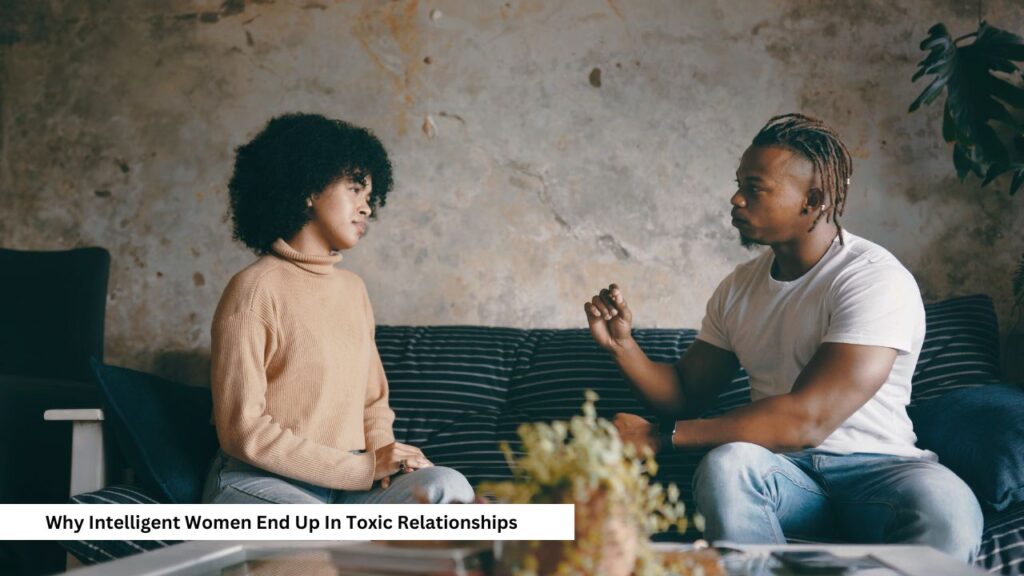
You Were Not Naive. You Were Chosen
Let me say something that might sit uncomfortably at first. Emotionally unavailable, manipulative, or simply deeply broken people are not drawn to emotionally intelligent women by accident. They are drawn to them specifically.
An emotionally intelligent woman offers something that is extraordinarily rare. She is able to see the humanity in someone who is behaving badly. She can hold complexity. She does not require a person to be all good or all bad.
She can sit with the version of someone who is hurting and recognise it for what it is, even when that person is hurting her.
To someone who has spent their life avoiding accountability, this is not threatening. It is comfortable. It is an environment in which they can continue to be exactly who they are without having to change, because the person they are with will keep finding reasons to understand.
You were not naive. You were perceptive, compassionate, and capable of seeing the best in someone, even when they were showing you something else entirely.
Those are not weaknesses. They were used against you. There is a difference.
The Way Emotional Intelligence Gets Weaponised
Here is the pattern that so few people name directly.
In a toxic relationship, your emotional intelligence does not protect you. It becomes the mechanism through which you stay.
You can see their childhood wounds. You understand why they shut down when they feel criticised. You recognise the fear underneath the anger. You know that when they push you away, they are actually terrified of being left, and so you do not leave. You understand too much to react to what is happening on the surface, and in understanding it, you absorb it.
You give them the benefit of the doubt because you know that people are complicated.
You stay in conversations longer than you should, trying to help them understand how their behaviour is coming across, because you genuinely believe that if they could only see it clearly, they would change.
They do not change because understanding why someone behaves the way they do is not the same as having the power to change it.
That is their work to do. Not yours.
You are so good at the emotional labour of a relationship, the empathising, the contextualising, the staying calm, and the trying to understand that you often end up doing it for both of you, indefinitely, until you are exhausted in a way that is hard to explain to people who have not been there before.
The Slow Erosion You Almost Did Not Notice
Toxic relationships rarely announce themselves. They do not begin with obvious cruelty or clear warning signs that would make it easy to walk away before you are in too deep. They begin with intensity. With feeling deeply seen. With a connection that seems extraordinary.
Then, slowly and almost imperceptibly, things shift.
A comment here that you let pass because you understood where it came from. A cancellation there that you forgave because you could see they were struggling. A pattern of behaviour that you noticed and named, calmly, thoughtfully, from a place of genuine care, and that changed briefly before returning to exactly what it was.
An emotionally intelligent woman notices the erosion. That is part of what makes it so painful. She is not oblivious. She is watching it happen in real time and simultaneously constructing the most generous possible interpretation of every incident, because she is trained, by nature and perhaps by history, to extend empathy first.
The erosion happens in the gap between what she sees and what she allows herself to conclude from it.
Why “Just Leave” Is Not an Answer
People who have not been in this situation often cannot understand why someone who is clearly perceptive, clearly articulate about their own emotions, and clearly capable of identifying unhealthy patterns does not simply leave.
The answer is that emotional intelligence does not equal emotional detachment. Seeing something clearly does not mean you are not also deeply in love with the person doing it.
Understanding that someone’s behaviour is harmful does not automatically dissolve the attachment you have built, the history you share, the version of them you fell in love with that is still occasionally visible through everything else.
Emotionally intelligent women often stay not because they cannot see the problem, but because they are holding the complexity of a full human being in their hands and finding it impossible to simply put it down. They are waiting for the person they know is in there to win.
Sometimes that person does surface. Sometimes things genuinely improve, for a while. That intermittent reinforcement, the return of the good version, the apology that feels real, the brief window where everything is what you always wanted it to be, is more binding than consistent dysfunction would ever be.
It is the hope that keeps you there. Hope is not stupidity, but it can keep you in a room you should have left a long time ago.

The Question Nobody Asks Themselves Enough
Here is the question that changed things for me, and it is not a comfortable one: What am I getting from staying?
Not in a cynical way. In an honest one, because we do not stay in things that offer us nothing. There is always something, familiarity, a sense of purpose, the identity of being the person who loves someone back to wholeness, the avoidance of the grief that leaving would require.
None of those things makes you weak. They make you human. Naming them honestly is the beginning of being able to make a different choice.
Emotionally intelligent women are often very good at understanding other people’s needs and very practised at not acknowledging their own. Somewhere in the long project of understanding someone else, they have stopped asking themselves the most basic question: Is this relationship good for me?
Not good for them. Not good for the potential of what this could be. Good for me, right now, as I actually am.
Final Thoughts on Why Emotionally Intelligent Women End Up In Toxic Relationships
The shame needs to go. The idea that you should have known better, that your emotional intelligence should have functioned as some kind of protective forcefield, is built on a misunderstanding of what emotional intelligence actually is.
It is the ability to understand and navigate feelings, your own and other people’s.
It is not immunity. It is not a guarantee. It does not make you invincible to loving someone who is not capable of loving you back in the way you need.
What it does give you, eventually, is the ability to understand what happened clearly enough to not repeat it. To recognise the early shape of something before it has had the chance to take up years of your life. To trust your own perception before the generous interpretation has time to overwrite it.
That is not nothing.
That is, in fact, everything. It just comes at a cost that nobody should have to pay, and it is okay to be angry about that.
You were not the problem. You were just loving someone who had not yet learned to deserve it.
Related posts:
Why you should never entertain a situationship
6 Toxic relationship habits that people think are normal
Why you wont leave that toxic relationship