How To Reclaim The Joy of First Meetings And Turn Awkward Interrogations Into Genuine Connection
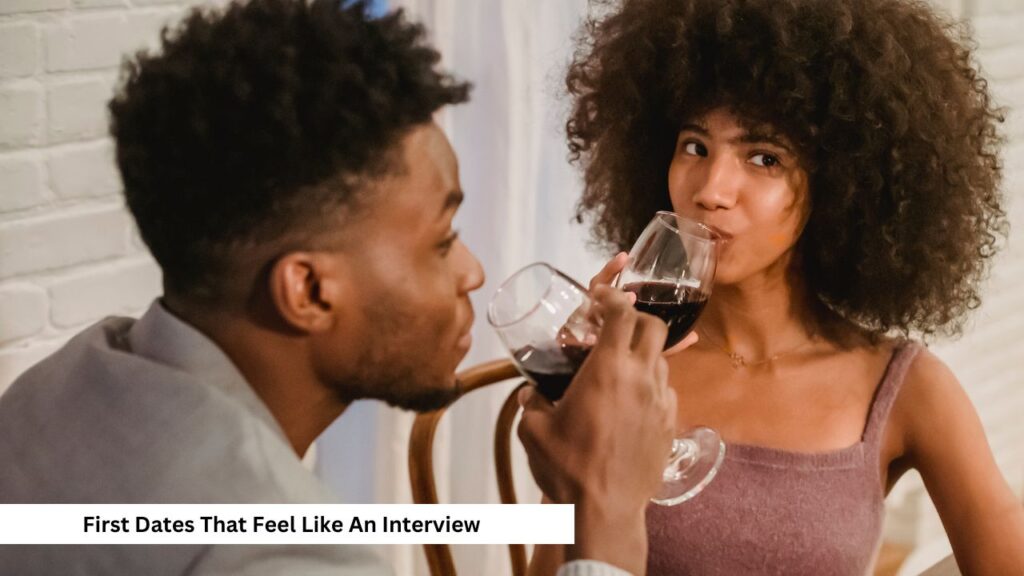
There is a particular kind of first date that most people have experienced at least once. You sit across from someone, the menus have barely been looked at, and already the questions are coming thick and fast. Where do you work? What do you do for fun? Do you want kids? Where do you see yourself in five years? It feels less like two people getting to know each other and more like a panel interview for a position you are not entirely sure you applied for.
I will be upfront, my own experience of first dates is genuinely limited. I was married for a long time, which means I missed the era of modern dating almost entirely. When I eventually found myself thinking about what dating even looks like today, I spoke to a lot of people who had been through it, observed it, written about it, and survived it. What struck me was how consistently the “job interview date” came up as something that made people dread rather than look forward to meeting someone new.
This article is about why that format feels so wrong, where it comes from, and what a genuinely good first date actually looks like instead. Whether you are newly single, cautiously re-entering the dating world after a long relationship, or just trying to figure out why your first dates feel exhausting rather than exciting, this is for you.
***Please note that this site uses affiliate links if you would like to read the legal stuff you can find it here
Where the Interview Date Comes From
The job interview format does not appear out of nowhere. It comes from anxiety, and specifically the anxiety of not knowing how to behave in an unusual social situation with high emotional stakes.
Most social interactions we navigate every day have established scripts. We know how to talk to a colleague, how to chat with a friend of a friend at a party, and how to make small talk in a waiting room.
A first date, particularly one arranged through a dating app where the two people have no shared social context, does not have a clear script. So people reach for the nearest available template. The job interview, with its structured questions and neat progression from one topic to the next, feels like a safe framework to fall back on.
The problem is that it produces the opposite of what a first date is actually supposed to do. A job interview is designed to assess qualifications and filter candidates. A first date is supposed to create warmth, reveal character, and build a little spark of connection. These are fundamentally different goals, and borrowing the format of one to achieve the other simply does not work.
Why It Feels So Draining for Both People
If you have ever left a first date feeling oddly exhausted despite the fact that nothing particularly dramatic happened, there is a good chance the interview dynamic was at play.
When a date becomes a series of questions and answers, both people are performing. The person asking is trying to seem thorough and interested. The person answering is trying to seem impressive and appealing. Neither person is actually being fully themselves, because they are both managing a presentation rather than simply existing in the same space as another human being.
Performance is tiring. Authenticity is not.
This is why a genuinely good conversation, even a long one, leaves you feeling energised, while an interrogation, even a brief one, leaves you feeling hollow.
There is also something subtly dehumanising about the checklist approach to dating. Treating a person like a series of attributes to be assessed, job, ambitions, family plans, hobbies, lifestyle choices, reduces them to their answers rather than allowing them to be a full, complicated, interesting person.
Ironically, the very format designed to help you decide whether someone is right for you often prevents you from actually seeing them clearly.
The Questions That Tell You Nothing
Let us be specific, because some first date questions are so common that they feel mandatory, yet they reveal almost nothing useful about the person sitting across from you.
“What do you do for work?” is perhaps the most reflexive first date question in existence. It is not without value, but it is often asked far too early and weighted far too heavily, as though a person’s job title is the most important thing to know about them. What someone does to pay their bills often says very little about who they are in a relationship.
“Where do you see yourself in five years?” is a question borrowed almost directly from job interview practice. It is designed to assess ambition and life planning, which are legitimate things to care about, but asking it within the first thirty minutes of meeting someone shuts down genuine conversation rather than opening it up. It produces rehearsed answers, not honest ones.
“Are you close with your family?” sounds warm, but it puts someone in the position of either sharing something genuinely vulnerable with a stranger or offering a vague, comfortable non-answer. Neither outcome serves the conversation.
The issue is not the topics themselves. Family, career, future plans, these things do matter. The issue is the timing and the framing. Questions that would feel natural after several conversations feel intrusive when presented too early.

What a Good First Date Actually Looks Like
A good first date does not feel like an interview. It feels like two people who happen to have found each other interesting, spending time in the same place, following the thread of a conversation wherever it naturally goes.
The shift from interview to genuine connection starts with one simple reorientation. Moving from questions designed to gather information to observations and reactions that invite the other person to respond naturally.
Instead of “what do you do for fun?” you might mention something you noticed, read, or experienced recently, and see how they respond to it. Instead of “do you want to travel?” you might tell them about a place that genuinely surprised you and ask if anything has ever surprised them in a similar way. These are not tricks. They are simply the kind of conversational moves that human beings naturally make when they are actually interested in someone, as opposed to when they are running through a checklist.
Laughter is also a vastly underrated first date metric. If you genuinely laugh together, and not the polite, performative kind but the real kind that catches you slightly off guard, that tells you more about compatibility than the answer to any structured question.
Humour requires shared perception. When two people find the same thing funny, something real has passed between them.
Re-Entering Dating After a Long Relationship: What Nobody Prepares You For
For anyone coming back to dating after many years in a committed relationship or marriage, like myself, the modern first date landscape can feel genuinely disorienting.
The rules feel different, the medium has changed, and the social norms around things like who pays, whether to meet for coffee or dinner, and how long to wait before following up are nowhere near as clear as they once were.
One thing worth knowing is that the pressure to perform well on a first date is something almost everyone feels, regardless of how confident or experienced they appear. The person across from you is probably nervous too. They are probably also wondering whether they are saying the right things, making the right impression, and asking the right questions.
Giving yourself permission to simply be a person, imperfect, still figuring things out, genuinely curious about the human in front of you, is not a lowering of standards. It is actually the most appealing thing you can bring to a first date. People can tell when someone is relaxed and present. They can also tell, very quickly, when someone is performing.
The other thing worth knowing is that a first date does not have to be a high-stakes audition. It can simply be an hour with someone new. Some of those hours will go nowhere, some will surprise you, and occasionally one will change things in a way you did not expect. That is enough of a reason to go.
The Venue Matters More Than People Think
Nobody tells you this explicitly, but the setting of a first date has an enormous influence on whether it feels like an interview or an actual human encounter.
Sitting directly across from someone at a formal dinner table, facing each other with nowhere to look but at each other, is essentially the physical configuration of a job interview. It puts both people in an evaluative stance.
Side-by-side or angled seating, walking dates, activity-based dates like a gallery, a market, or a casual cooking class, all of these change the social dynamic in subtle ways that make genuine conversation more likely.
When you have something to look at, react to, or do together, you are experiencing something jointly rather than assessing each other in isolation. Shared experience is the raw material of connection.
A coffee shop with comfortable seating is often genuinely better than a formal restaurant for a first meeting. Lower stakes, easier to leave if the chemistry simply is not there, easier to extend if it is.
How to Reset Midway Through an Interview Date
Sometimes you realise ten minutes into a date that it has taken on a question-and-answer rhythm, and you want to change that. This is entirely possible, and doing it well is actually a form of social skill worth developing.
The simplest way is to respond to a question not just with an answer but with a story. Stories are inherently non-interview-like. They create atmosphere, reveal character indirectly, and give the other person something to respond to with their own associations rather than another question.
If someone asks where you grew up, rather than simply naming the place, tell them one specific thing about it that shaped you. The conversation will almost always go somewhere more interesting from there.
You can also name the dynamic gently if it feels right. Something like “I feel like we are both interviewing each other, should we just talk?” can break the tension with humour and reset the mood entirely. Most people feel instant relief when someone names the awkwardness, because it means they were not the only one feeling it.
Final Thoughts on Why I Stopped Going on First Dates That Felt Like Interviews
The best first dates are the ones where you walk away not having learned a complete dossier of facts about someone, but having felt genuinely curious about them. They are the ones where time passed differently than you expected, where something made you smile that you are still thinking about on the way home.
That kind of experience does not come from a structured series of questions. It comes from showing up as yourself, being genuinely interested in the person across from you, and giving the conversation room to go wherever it actually wants to go.
First dates do not have to feel like auditions. They can feel like the beginning of something, or simply like an interesting hour with another human being.
Both of those outcomes are worth turning up for.
Found this useful? Save it to your Pinterest boards and share it with someone who needs a little first date encouragement.
Related posts:
Dating in my 40’s, what I wish I knew
Is it time to hire a dating coach? 5 Signs you might need one