Let me paint you a picture. He said he’d message you later. It’s been four hours. In those four hours, you have checked your phone approximately forty seven times, replayed your last conversation looking for anything that might explain the silence, convinced yourself something is wrong, then convinced yourself you’re being dramatic, then convinced yourself something is definitely wrong, drafted and deleted a message twice, and somehow ended up in a full spiral about the future of the entire relationship.
After all that, he was just busy.
If that sounds familiar, if you felt personally called out by that paragraph, welcome.
This one is for you, and no, you are not crazy. You are not too much. You just might have what’s called an anxious attachment style, and once you understand what that actually means, so much of your behaviour in relationships starts to make a whole lot more sense.
***Please note that this site uses affiliate links if you would like to read the legal stuff you can find it here
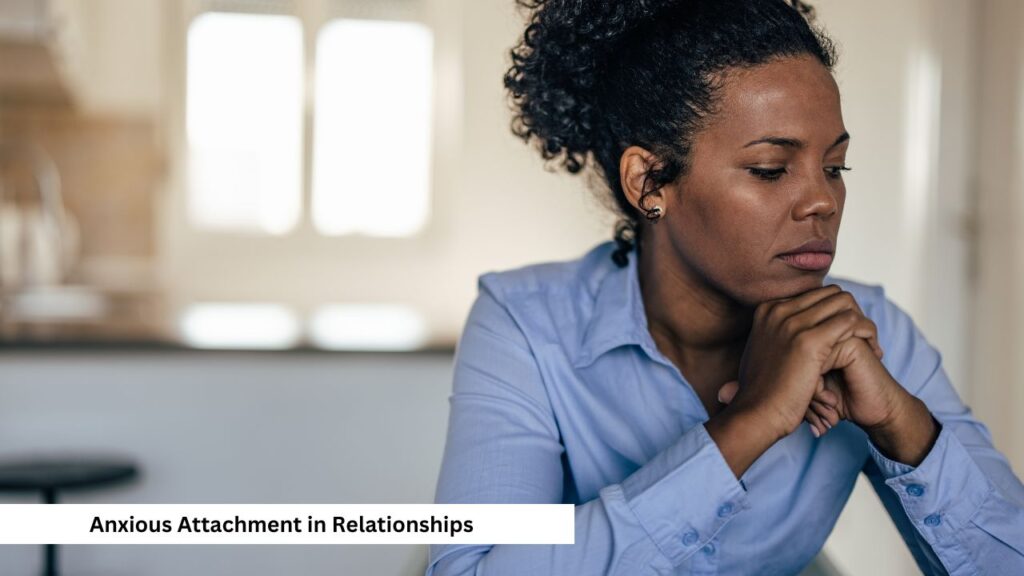
So What Is Anxious Attachment — In Plain English
Attachment styles are basically the blueprint your brain built in childhood for how relationships work. They come from your earliest experiences with the people who were supposed to take care of you, how available they were, how consistent, how safe they made you feel.
If those early experiences were a little unpredictable, love was there sometimes and then other times not. Attention had to be earned, or you never quite knew which version of a parent you were going to get, your brain learned something. It learned that connection is uncertain. That the people you love might leave or pull away, and that the safest thing to do is stay alert.
Watch for signs and never fully relax.
Fast forward to adulthood, and that same system is running in the background of every relationship you’re in. Your brain is still scanning. Still watching for the shift. Still waiting for the other shoe to drop.
Why Everything Feels So Loud Inside Your Head
Here’s the thing about anxious attachment that nobody really talks about, it is exhausting. Not just for the people around you, but for you.
Living inside a brain that is constantly monitoring, analysing, and preparing for potential abandonment is genuinely, physically tiring.
Every unanswered message is a clue. Every shift in his tone is a signal. Every moment of distance, even a totally normal, healthy distance, gets processed as a threat, and because your brain is trying to protect you, it generates thoughts at a rate that feels completely out of proportion to what’s actually happening.
That’s the overthinking. It’s not you being irrational. It’s your nervous system doing what it was trained to do, trying to predict and prevent the thing it fears most. Which is losing the connection.
The Things Anxious Attachment Makes You Do
Some of these might make you cringe a little. That’s okay. Recognition is the first step, and there is zero judgment here from me.
You seek reassurance a lot. Not because you’re needy in some character-flaw kind of way, but because reassurance temporarily quiets the alarm system.
The problem is that it only works for a little while before the alarm starts up again.
You read into everything. A shorter text than usual. A slightly different sign-off. Being left on read for two hours. These things register as meaningful data, and your brain will work overtime to figure out what they mean.
You can go from totally fine to fully spiraling in about eleven minutes and 21 seconds.
One thought leads to another, and before you know it, you’ve constructed an entire worst-case scenario out of something that hasn’t even happened.
You sometimes push people away while desperately wanting them to stay.
The anxiety comes out as frustration, or withdrawal, or the occasional accusation that they don’t care, even when they do. Even when they’re trying.
Then comes the guilt afterward. Which adds another layer to the whole thing.

Why You’re Drawn To People Who Confirm Your Fears
This is the part that genuinely blew my mind when I first understood it. People with anxious attachment don’t just randomly end up with emotionally unavailable partners. There’s a pull. A familiarity because someone who is a little distant, a little hard to read, a little inconsistent, they feel like home to a nervous system that grew up with uncertainty.
The secure person who texts back consistently and is clear about how they feel? They can actually feel kind of boring. Suspicious even. Your brain doesn’t quite know what to do with someone who just shows up without drama.
Meanwhile, the one who keeps you slightly off balance feels electric. Familiar. Like something worth chasing.
And so the cycle continues, anxious person pursues, avoidant person retreats, anxious person panics, avoidant person pulls further away, until someone either breaks the pattern or breaks entirely. Usually both.
What It Does To the Relationship
When anxious attachment is running the show, it’s hard for a relationship to find solid ground. Not because you’re a bad partner, you’re often one of the most loving, attentive, all-in partners someone could have, but the anxiety creates a static that makes real intimacy hard to sustain.
You need more reassurance than most people know how to consistently give.
The reassurance works temporarily, and then the anxiety returns. You might pick fights about things that aren’t really the thing. You might shut down when what you actually want is to be held. You might be so focused on whether he’s pulling away that you miss the moments when he’s actually right there.
It’s not about love. You have plenty of that. It’s about the noise between you and the ability to just be in it without waiting for it to fall apart.
The Good News, and There Actually Is Some
Anxious attachment is not a life sentence. I want to be really clear about that because it can feel like a fixed thing, like a personality trait you’re just stuck with, but it’s not. It’s a learned response.
What’s learned can be unlearned, or at least, significantly rewritten.
It takes time. It often takes therapy or some kind of intentional inner work. It takes getting honest about your patterns instead of just suffering through them, and it takes practising something that does not come naturally at first. Tolerating uncertainty without immediately trying to resolve it.
It also helps enormously to be with someone who is secure. Not as a fix, another person is never the fix, but as an environment where your nervous system can slowly learn that closeness doesn’t automatically come with the threat of loss.
Final Thoughts On Anxious Attachment In Relationships
If you’ve spent most of your relationship life feeling like too much, too sensitive, too needy, too in your head, I just want to say something to you directly. You are not too much. You are someone whose early experiences taught you that love was unpredictable, and you adapted. You built a whole system to cope with that uncertainty. It’s just that the system is still running in situations where it no longer needs to.
I completely understandhow t his feels because I know I often seal with anxious attachment myself. The key here is to recognise it for what it actually is rather than get lost in it.
Understanding anxious attachment doesn’t mean you have something wrong with you. It means you finally have a name for the thing that’s been running in the background of your whole romantic life, and once you can name it, you can start to work with it instead of just being dragged along by it.
You deserve a relationship where you can exhale. Where you don’t have to monitor, analyse, and brace yourself.
Where the love feels stable enough that your brain can finally, finally stand down.
That kind of relationship is possible, but it starts with you understanding what’s actually going on inside you first.
Related posts:
Trauma bonding, what it is and why it makes leaving feel impossible
10 Things women do when they are deeply unhappy in a relationship
How to know when its time to walk away